Restdays in Osh
Osh is the second biggest town in Kyrgyzstan and the country has decided to become a tourist destination and has taken away all the bureaucratic regulations that its neighbour Uzbekistan still maintains. This has led to a large influx of tourists and in Osh there are lots of nice restaurants and hotels.


We didn’t like the guesthouse we stayed at and since Osh is the midpoint on our trip between Göteborg and Bangkok we decided to celebrate this by stopping a little longer and stay at a better hotel than the guesthouse we checked in at the first night.

This little hotel was very nice. It was very quiet, had a nice lounge area, a lawn, an outside sitting area and wifi internet that was accessable from everywhere within the premises.
We spent the first few days just relaxing and only left the hotel to have dinner with our friends who still stayed at the backpacker guesthouse we stayed at the first night.

One afternoon a french-malaysian couple checked in at our hotel. They had been trecking in the mountains in the south of Kyrgyzstan and would stay one night in Osh before going home. The french guy is a chef and runs two french restaurants and a cooking school in Kuala Lumpur while the wife is a writer for a cooking magazine in Malaysia. Having had only simple food during their two week long trek they wanted some proper food and asked to borrow the hotel’s kitchen and offered us to help in cooking and share their meal.
It was wonderful to see professionals at work and the steak and the kidneys fried with pepper and paprkika tasted wonderful.


The city of Osh doesn’t have very many tourist attractions apart from its bazar. We went there to buy some rope to tie our bikes on a truck when entering China (it is forbidden to cycle through the noman’s land and we will need to get on a truck).

In the bazar it is possible to find almost everything, even cycle parts…… But they are not of the latest standard and this is why many touring cyclists prefer to use old components of older standards instead of the newest which can’t be find in places like this.

We also spent some time to do a thorough maintanence of our bikes. We took off chains, cassettes and chainrings and cleaned them carefully. Our clothes also liked to get a proper wash in a washing machine instead of the rinse in a sink somewhere they lately have got used to….
Kyrgyzstan doesn’t require us to have visas and without feeling any pressure from the visa clock we decided to postpone our departure from Osh with one day because we simply felt we wanted to stay longer. Instead of leaving on Sunday we would leave on Monday but that wouldn’t cause any problem. It was a three day ride to the chinese border and our new plan was to enter the country on Thursday. The border is closed during weekends but our plan to arrive to the border on a Thursday would give us plenty of backup time in case something would slow us down.

Day 96-98 (Osh – Sary Tash)
The distance from Osh to the border is 250 km and even if it is uphill most of the time we planned to do it in three days. When we decided to postpone our departure with one day Bartek, our Polish friend whom we have cycled with from time to time since we left Azerbaijan, decided to go as planned with some Chezch cyclists he had met. We decided to meet them either after 180 km in or near the village of Sary Tash or at the border and enter China together.
When the day of departure finally came, we didn’t leave the city until 3 PM. It was a bit late but the road was good and the distance short so we didn’t worry or feel any need to speed up.
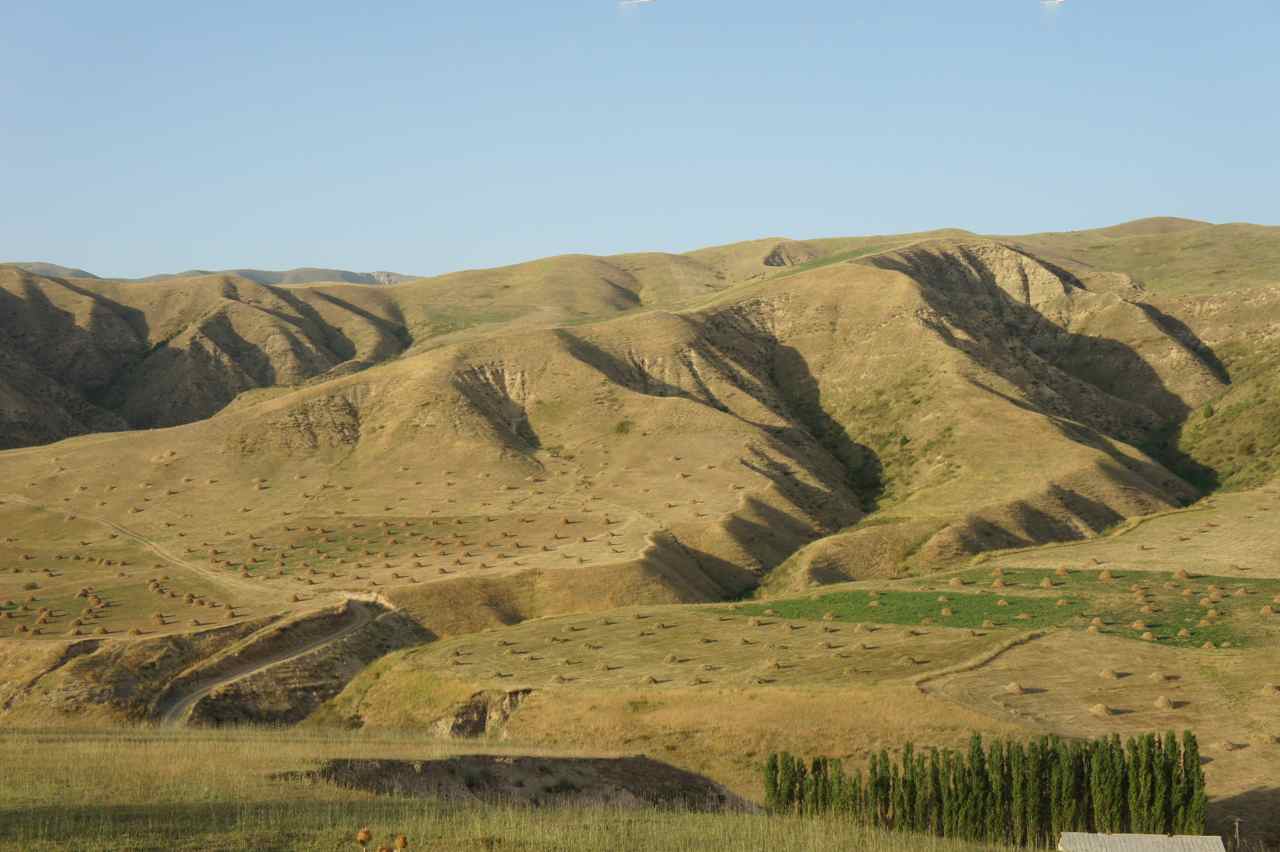

In the summer of 2011 we spent a month cycling on the Pamir plateau in Tajikistan. The landscape in the Pamirs resembles a lunar landscape and is very dry, rocky and dusty. Although being located close to the Pamirs, the mountains of southern Kyrgyzstan looks very different. Instead of the moonlike landscape on the Pamir plateau, the Kyrgyz mountains are green and water is never far away.
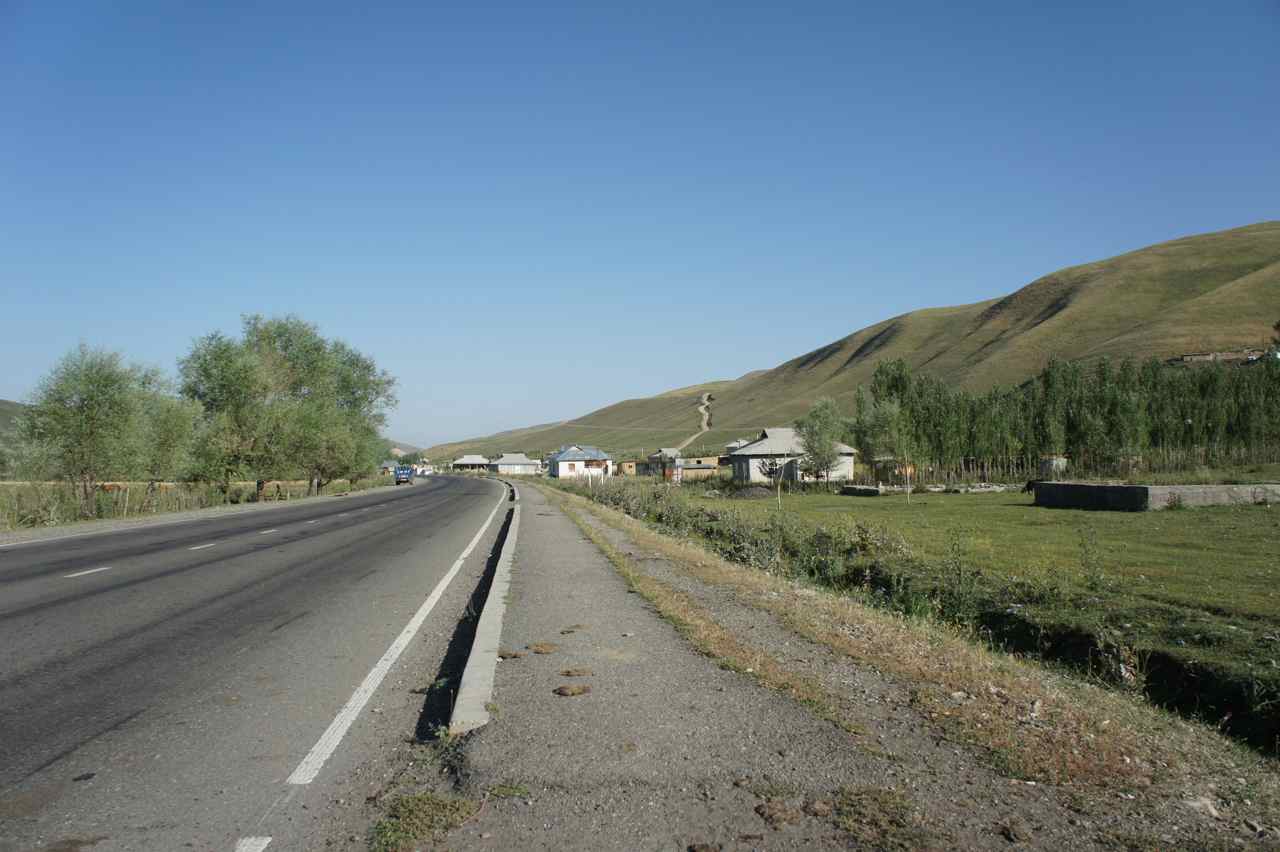
The road south from Osh towards Sary Tash is actually a part of the famous Pamir Highway, but on the Kyrgyz side of the border. Until only a few years ago the road was in very poor condition with broken asphalt and lots of potholes. Chinese money and labour has now led to a road in perfect condition that is a dream to ride a bike on.
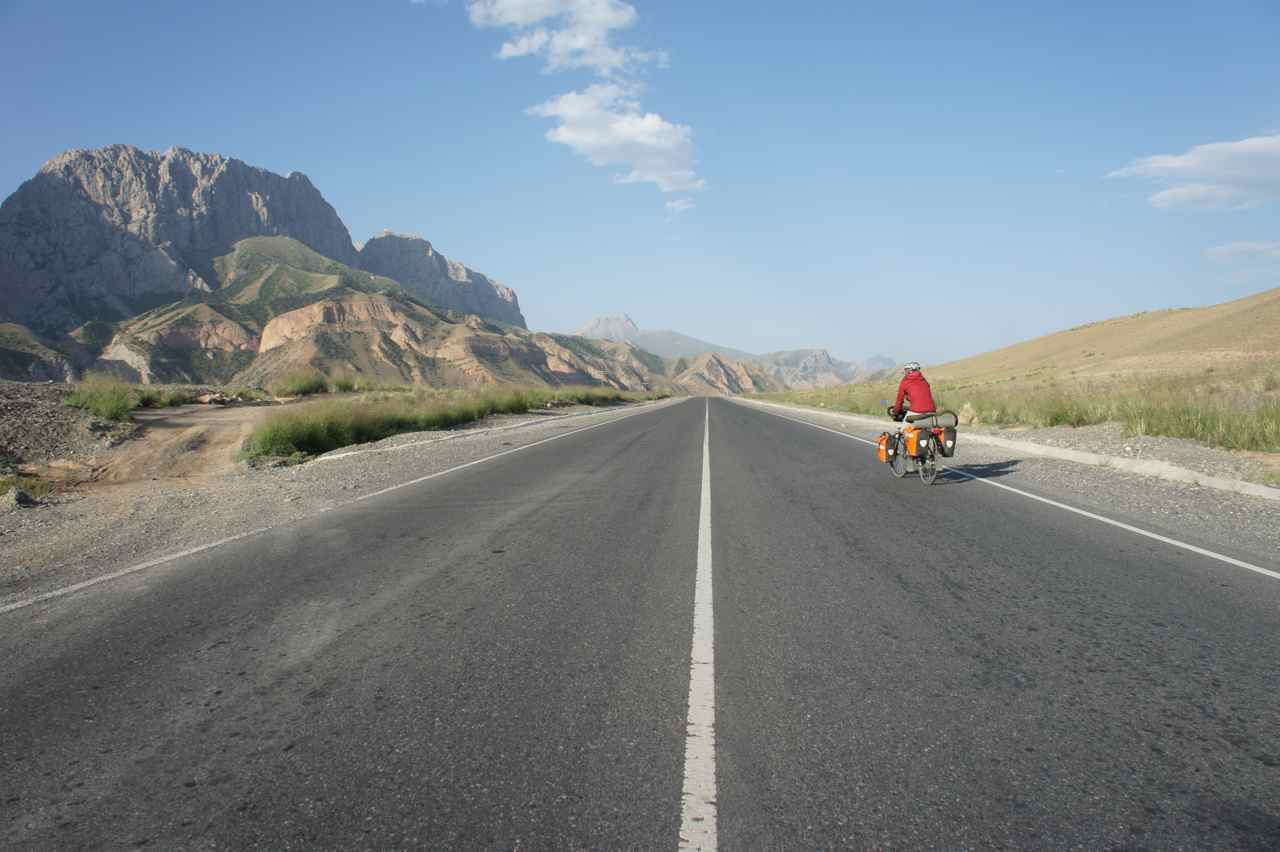

Between Osh and Sary Tash there are two mountain passes. The first is at about 2500 meter and the second is at 3600 but from Sary Tash to the border it is flat almost all the way.
Since we didn’t leave Osh until 3 PM we didn’t manage to get very far the first day. The late start combined with a stunning landscape that made us stop to take photos many many times led to us not getting across the first pass during the first day. We decided to camp just below the start of the climb up to the first pass.
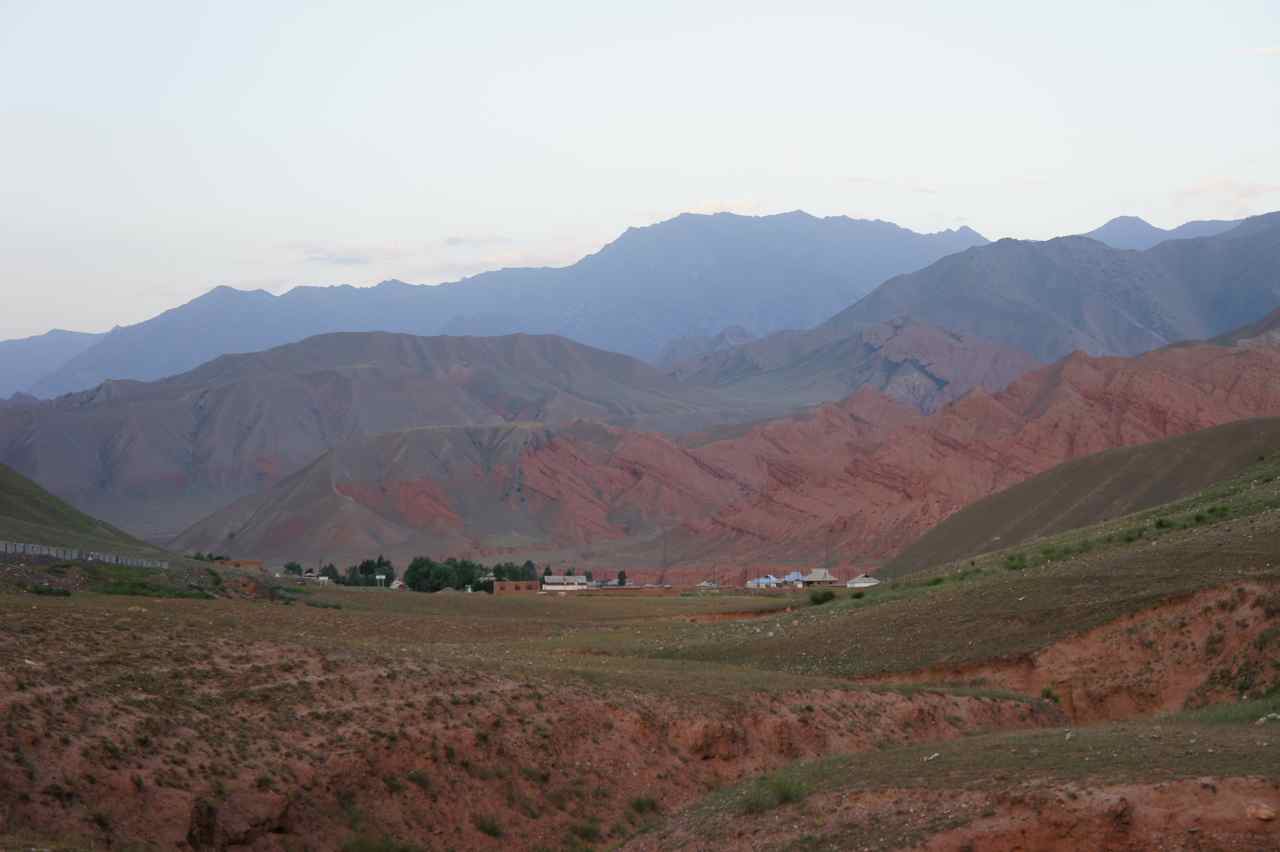

After the pass at 2500 meter we enjoyed a wonderful downhilll ride along a couple of switchbacks. Unfortunately the downhill part took us down 700 meter to a level which was below the altitude we had started at in the morning. Riding downhill is normally fun, but when you know that an even higher pass waits for you later in the day you wish that the downhill ends as quickly as possible.

We didn’t know if there would be villages were we could stop and shop food, but there turned out to be many. Finding water was also never difficult since almost all villages had a tap of running water somewhere along the main road.

When we had a short break to buy some cold drinks at a teahouse during our second day, we saw some cyclists approaching us from the opposite direction. When they got close we saw a familiar face. It was the german cyclist Johannes who we had cycled with for some time in Uzbekistan, but who we split from in Samarkand since he was going to the Pamirs while we headed for the Fergana valley. He was now cycling with two polish cyclists and it was a dear re-union and the brief stop to buy a drink turned out to be a one and a half hour long stop to exchange experiences and tips.
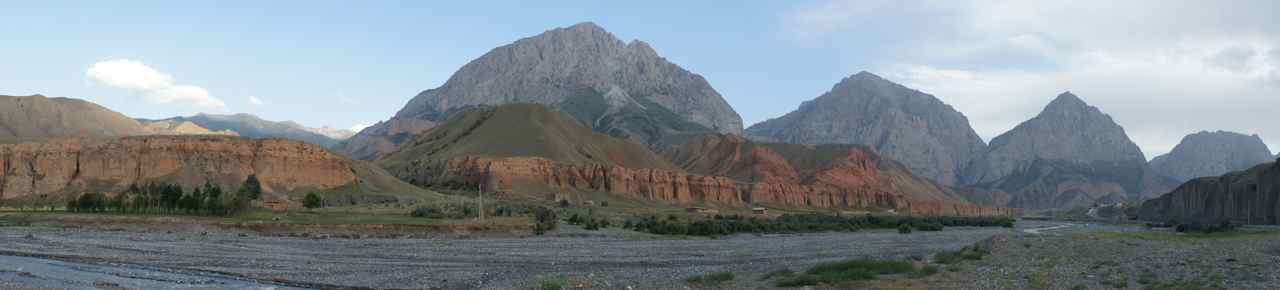

After having crossed the first pass in the morning it was upphill the rest of the day. Our plan was to camp just below the switchbacks that would take us up to the 3600 meter pass before Sary Tash. We were riding without a proper map and when we saw what we thought was the beginning of the steep climb we decided to stop and camp even if it still was a bit too early.

When we woke up in the morning it was only 9 degrees. We were now at 2400 meters altitude and had 1200 meter to climb before arriving in Sary Tash where we planned to have lunch before continuing to the border where we had made an appointment with our friend.

After having climbed the first steep climb just next to our camp site we understood we had made a mistake. We were not camping below the switchbacks – they were still far ahead of us and this meant that we would arrive to Sary Tash in the afternoon rather than around noon as we had planned.

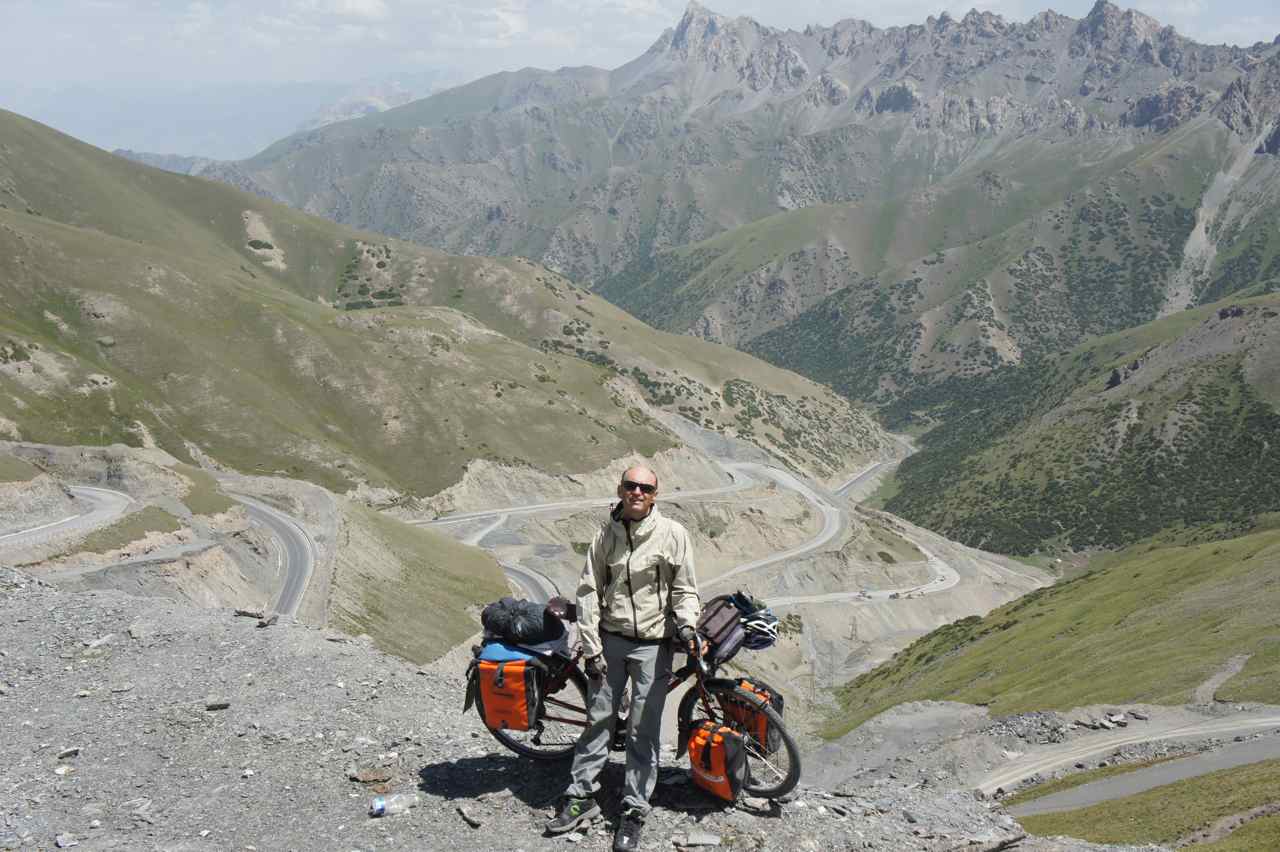
Climbing the switchbacks was hard. The road was good and not too steep but we started to feel the lack of oxygen and had to stop to catch our breath quite often. When we were resting at one of the turns a boy on a donkey appeared as out of nowhere. We exchanged a few words with him and then we continued up the hill. The boy on the donkey followed us closely. Everytime we stopped, he stopped. He rode his donkey between us and started to whistle songs and copy our heavy breathing. It really annoyed us and finally we had to chase him away only to see him again at the top of the mountain pass.

Sary Tash is a little tiny village that sits at the intersection where the road from China joins the road from Tajikistan (Pamir Highway). It is not a town – a village is a more proper word for this community but since it is located at an important junction it has a few homestays/guesthouses.
Very exhausted and hungry after the long climb we rolled into the little village at 2.30 PM on Wednesday instead of 12 as planned. We went to one of the guesthouses to get something to eat before continuing to the border at 4.30 PM.

When we left Sary Tash the wind had picked up and the sky had also got some ugly dark clouds. First we had the wind on our backs but then the road turned and the wind became a strong crosswind. After having cycled 15 km from Sary Tash we got an SMS. We suspected it was from our Polish friend we were going to meet so we quickly stopped to see what he had to say. The message started with the words:
”Bad news guys”….
And the message that followed was that he had got to the border only to find out that it would close the following two days (Thursday-Friday) in addition to the normal weekend closing. It was 17.40 on Wednesday afternoon and 20 minutes left before the border would close for four consecutive days. Our friend did the only reasonable thing to do and went across but we had still 55 km to go and quickly understood that there would be no chance for us to get into China until the border re-opened on Monday morning.
We stopped a truck that came from the border and the driver confirmed that the border would be closed for four days.
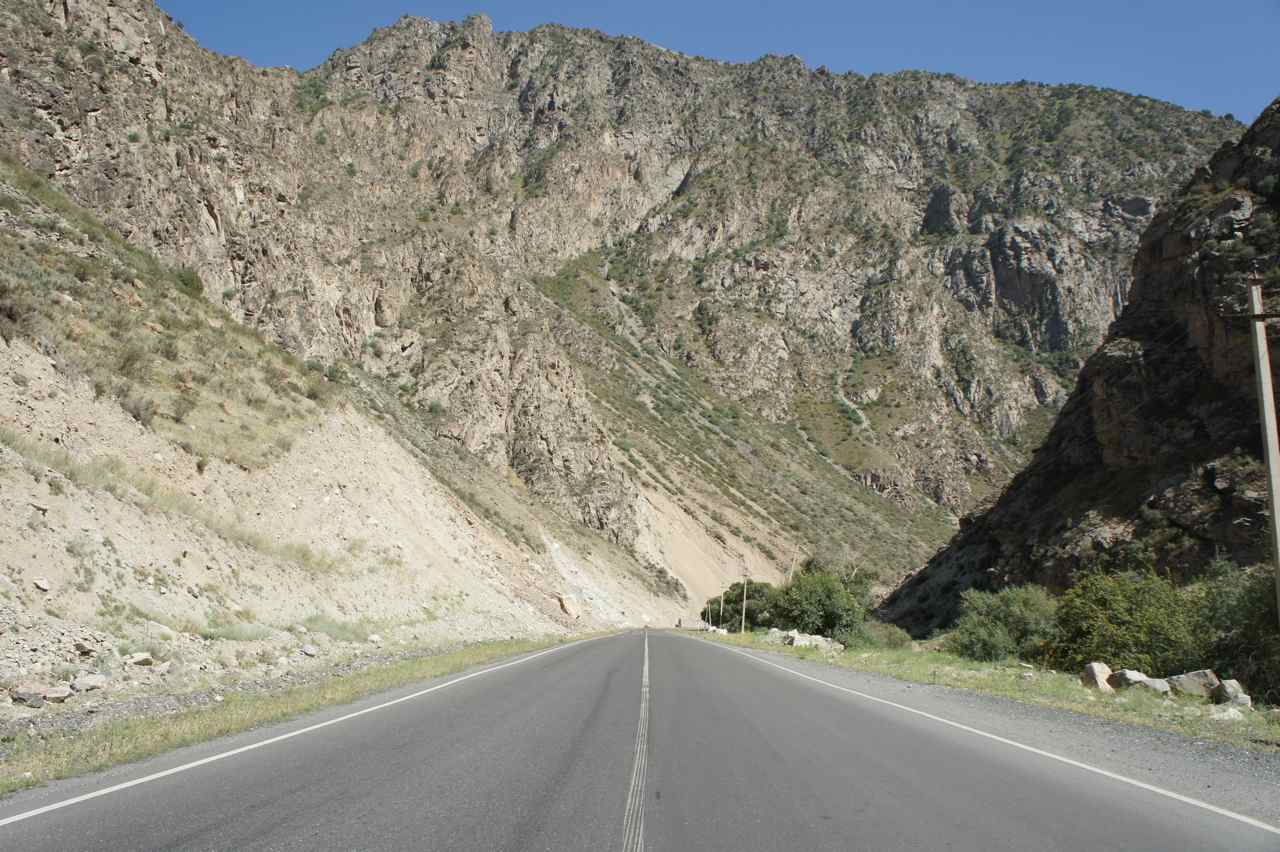

It was cold and windy, we had got bad news and to add some spice to the situation it also started to rain. We were too tired to ride back to Sary Tash and decided to camp and ride back the next day. When we had just spotted a perfect camp site and brought our bikes down the steep sides of the road we saw a truck stopping 100 meters ahead of us. The driver jumped out and ran down to the stream to fetch some water close to where we were going to camp. We hurried to him and asked if we could go with him back to Sary Tash. His truck was carrying some construction machine and there was plenty of room for our bikes so we loaded them and our baggage and jumped into the passenger seat. 15 minutes later we were back in Sary Tash – our place of confinement for the coming four days.
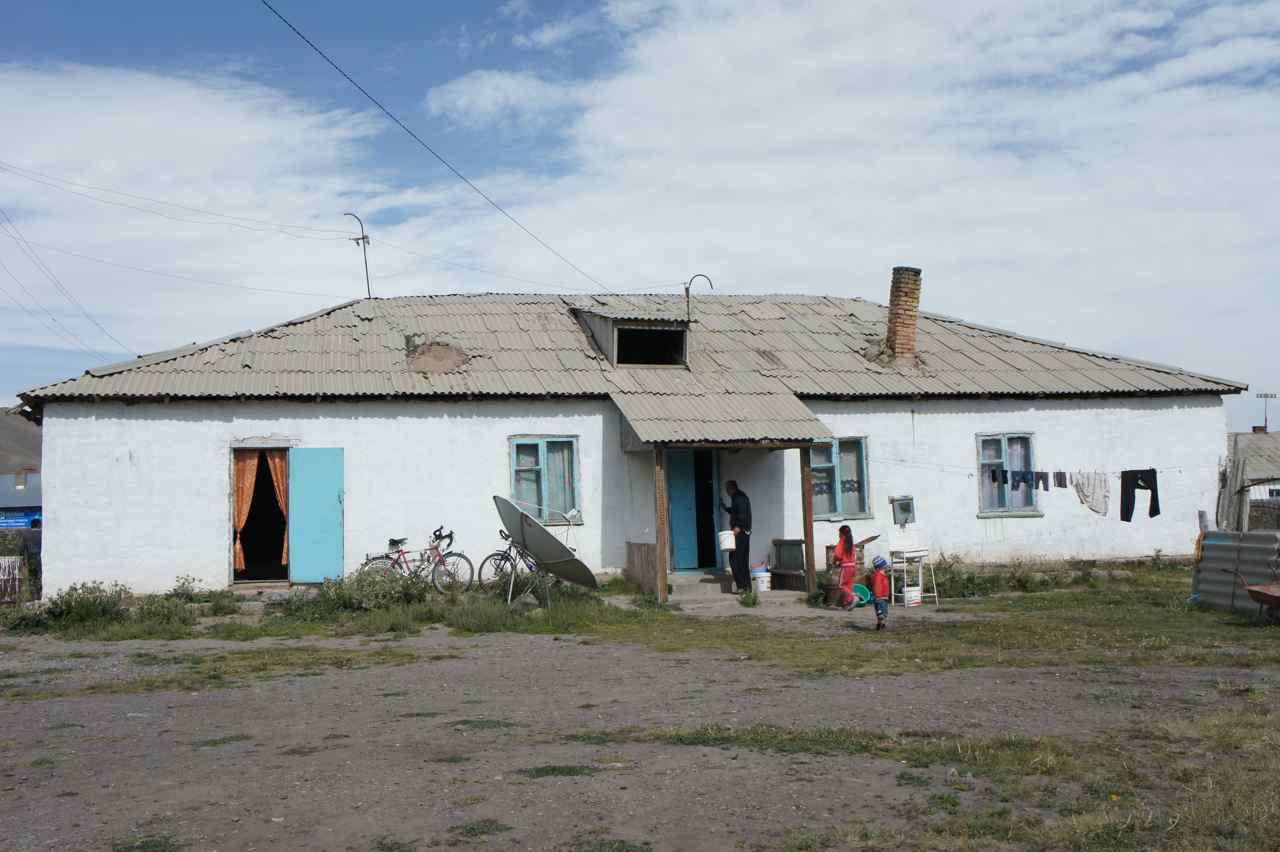

In front of us was the closed border to China and not far in the other direction was Tajikistan to which we had no visa. Behind us was a high mountain pass that we didn’t want to climb again. We were simply stranded in the tiny little mountain village of Sary Tash that is completely without any modern facilities such as running water or showers. Internet access – just forget about it.
We checked in at one of the guesthouses and there were other tourists who didn’t yet know about the closing of the border and who quickly understood that they were also stranded in a village at the end of the world. Too add to a situation that was far from what we had expected we saw the annoying boy on the donkey we had met on the mountain in front of the guesthouse and soon it became clear to us that he was a member of the family who runs the guesthouse we just checked in at.

Things started to get clear during the evening. It turned out that the border would be closed on Thursday due to the celebration of the end of Ramadan, but we couldn’t understand why it would be closed on Friday too and during the Thursday morning we walked around the village to try to find information. Some people said it would be open and some said it would be closed.
Since many people in the village work at the border we got 3-4 people we met to call to someone at border to get confirmation if it would be open on Friday or not. All those phonecalls resulted in the same information ”border will be closed on Friday and open again on Monday”.

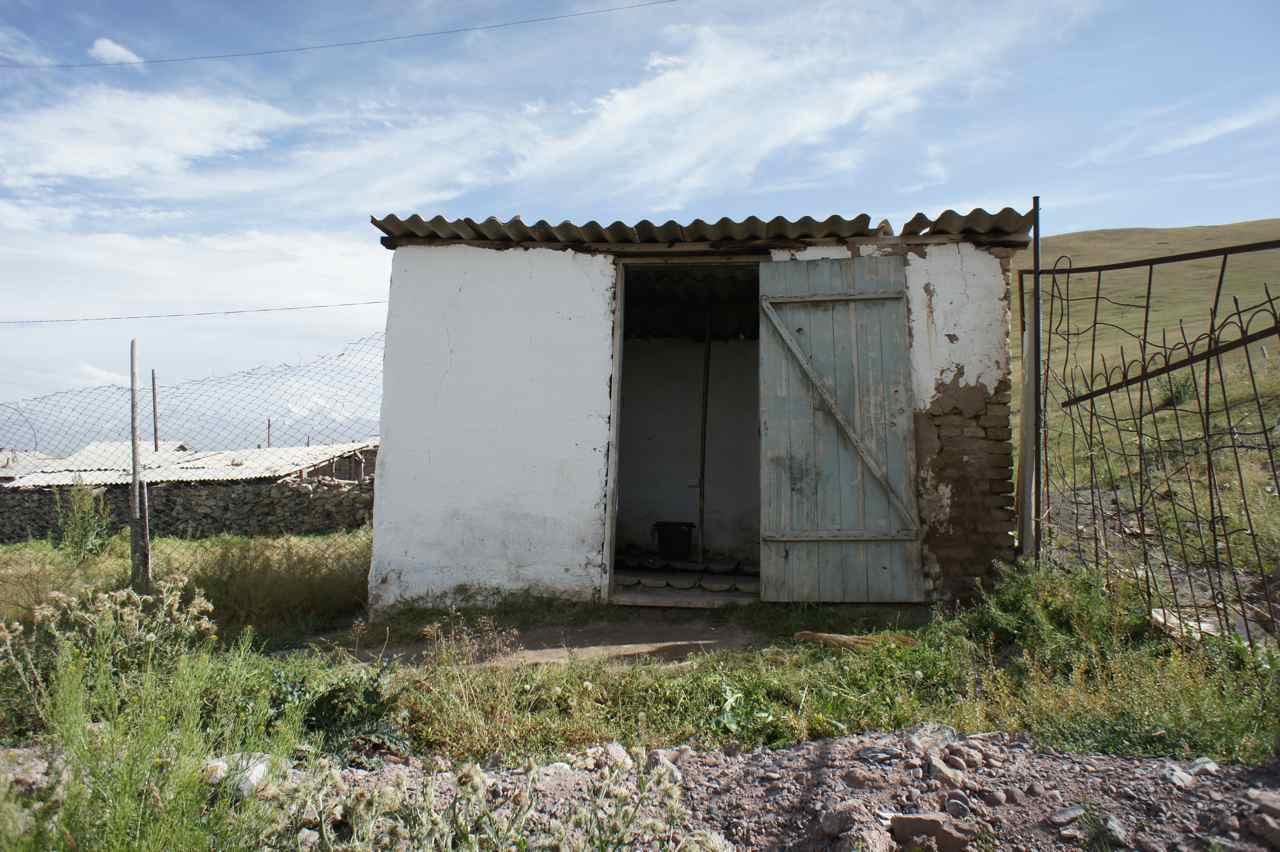
Then bring a friend along….
This toilet is a standard toilet in central asia. We have seen better and far worse
Since we were still not sure if the border would be open on Friday or not we all decided to go out to the intersection early on Friday morning to see if there would be any trucks heading towards China which would indicate that the border was open. The road was completely empty and there was absolutely no traffic and we lost our last hope of being able to get to China before Monday.

We were obviously stranded in this little mountain village so what to do?
Some travellers decided to catch a ride back to Osh while others decided to stay. We were exhausted after the ride over the two mountain passes and thought we could as well enjoy the extra rest days. But without any sort of entertainment in the village there has been nothing to to do other than sleep, write blog posts, sort photos, watch movies on the computer and keep an eye on the road from China.


Late in the Friday afternoon convoys of trucks started coming from the Chinese border. How should we interpret that???? We walked up to a small restaurants where some trucks had stopped and asked and it turned out that the border had been open during the Friday after all. It was now Friday evening and we had blown our chances to get to China until Monday. We had tried to gather and analyse information instead of just taking the chance to go to the border to see with our eyes.

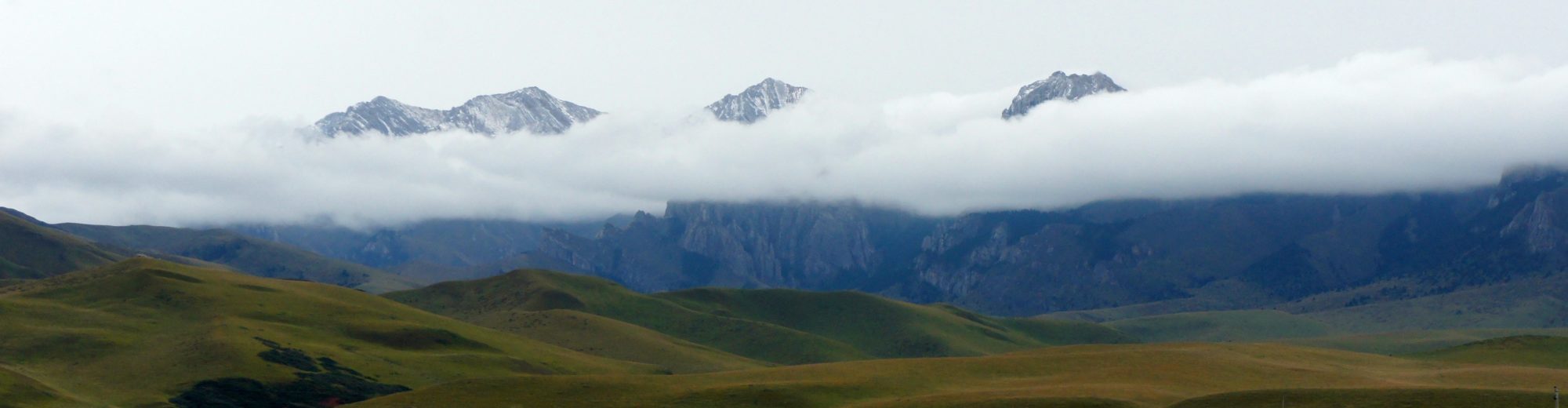
Having missed getting to China on the Wednesday was bad luck, but missing the Friday’s opening was a little bit more annoying, but we didn’t get upset since we had accepted the situation already when we got the first SMS. We had come to terms with our fate that meant that instead of riding to China we could look forward to two more days in Sary Tash that although it has marvellous views over the snow capped 6000 meter peaks of Pamir still is a dead boring little village.
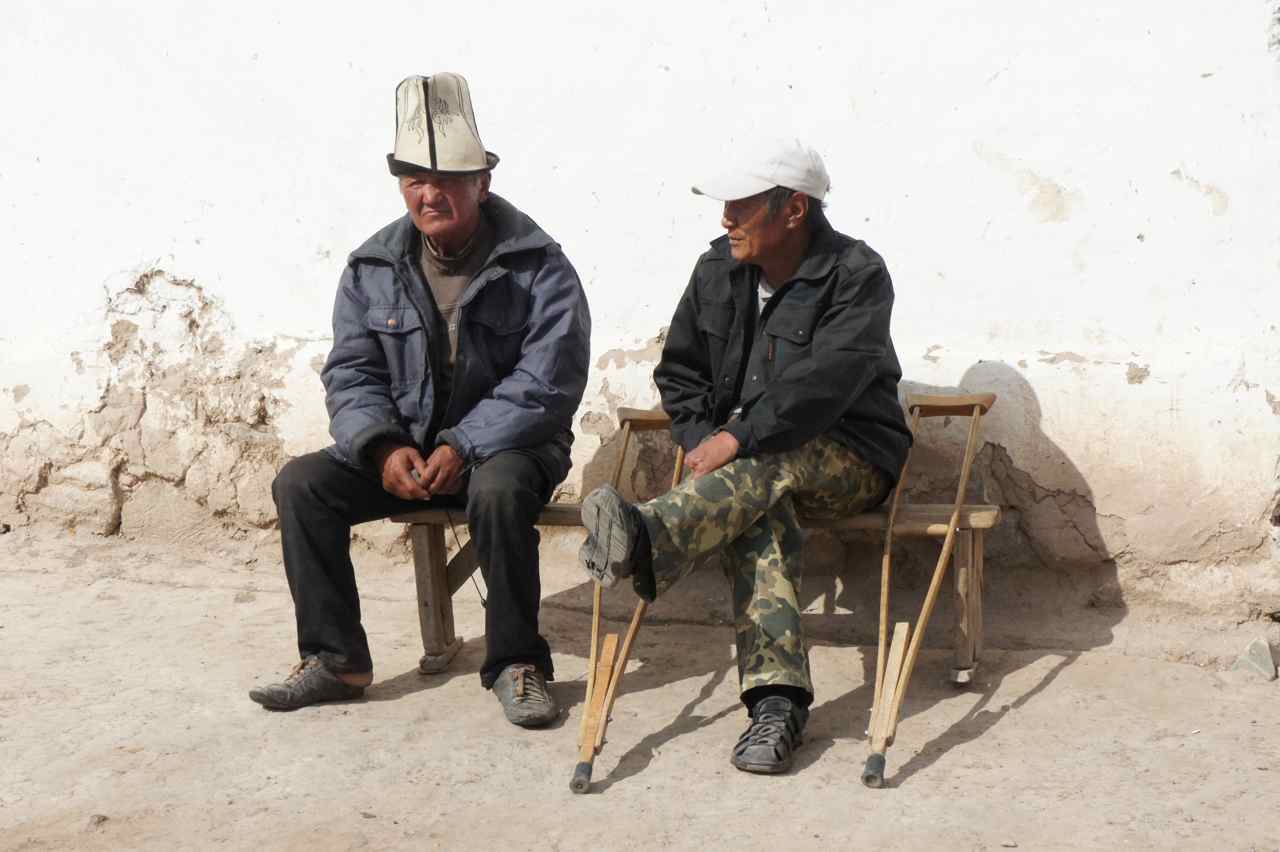

We stayed two days in the first guesthouse, but then decided to change to a cheaper one.
Most travellers who come to Sary Tash only stay for a night and continue the next morning. We will have spent four nights here and we think we will be the new record holders….
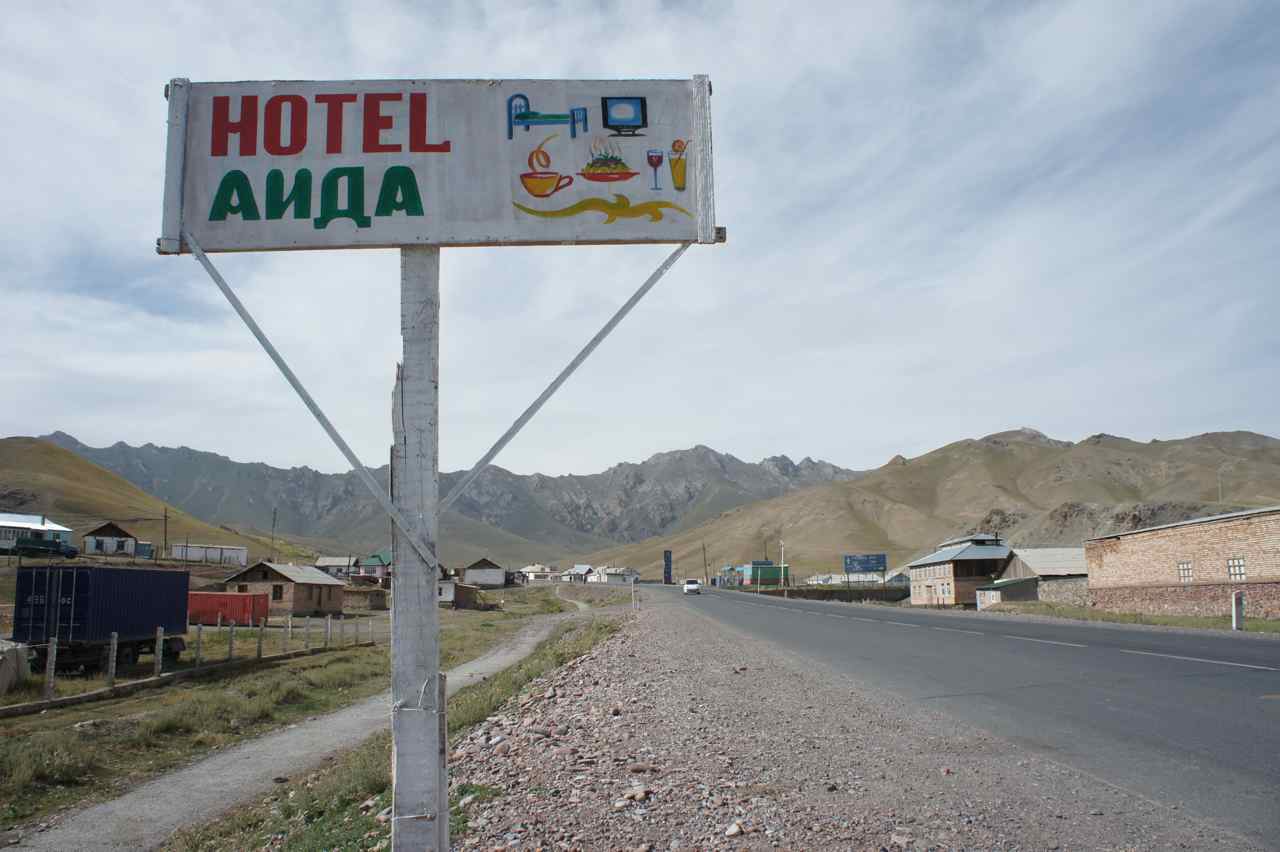

Our plan is now to cycle to the border on Sunday in order to cross into China on Monday morning and arrive the city of Kashgar on Monday afternoon or evening.
This entire episode of our journey between Göteborg and Bangkok resembles the ferry ride across the Caspian Sea which also included long waiting time, no or conflicting information and frustration that in the end led to giving up and just accepting the situation as it is. It could after all have been a lot worse. Just imagine the extreme frustration if the closing of the border for example had occured very close to our last entry date of our chinese visas.
Half a year ago I would have kept myself busy trying to answer questions suchs as ”what if we had started earlier, didn’t stop too long, gone longer the first day” etc.. Now it seems that I instead quickly accept the new situation and conditions. So it is fair to say that all these hardships have at least led to some personal development….
The lessons learned is to always try to enjoy things as they are even if this means spending four days in a boring village where the shower is a bucket in the backyard and the toilet is a hole in a dirty wooden floor.
Day 99-100 (Sary Tash – Kashgar)
On Sunday we had a job to do and that was to cycle to the chinese border. The other travelers who accompanied us in Sary Tash during our ordeal there could look forward to yet another day in the village since they would take a transport on Monday morning. It would be to lie to say that it wasn’t a relief to finally leave Sary Tash in the early Sunday afternoon.
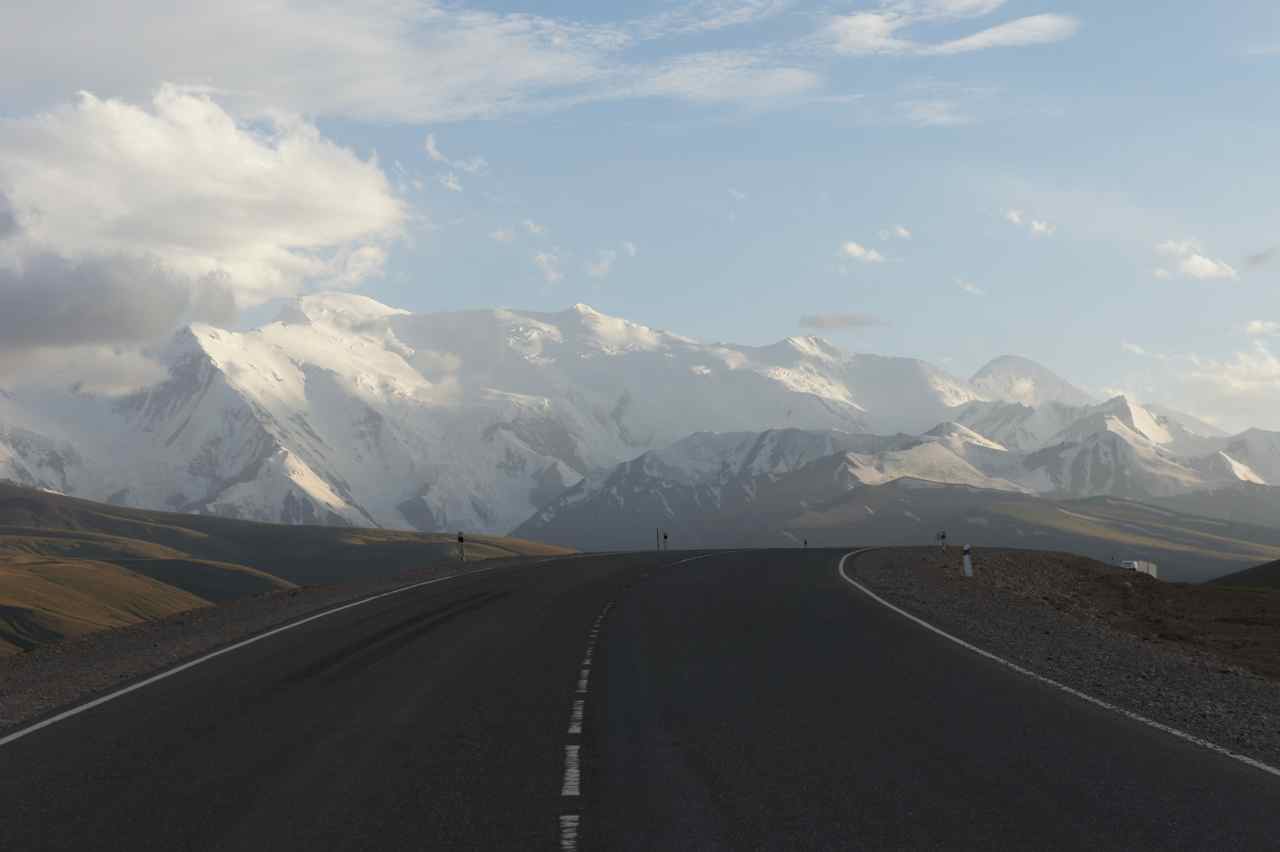

According to a signpost at the junction in the village it was 71 km to the border and our intention was to camp some 10 km before getting there. The altitude profile we had made already in Osh told us it was going to be a flat ride the first 30 km and then a little bit uphill.
We all know that travelling along the same road a second time usually gives a feeling that it is shorter and thus we felt that the first 15 km of the day went past very quickly. Then came the uphill section. We were already at 3500 meter and although not very steep at all the road slowly brought us up to 3760 meters altitude. Our speed up that hill was very low but that was soon to be changed.
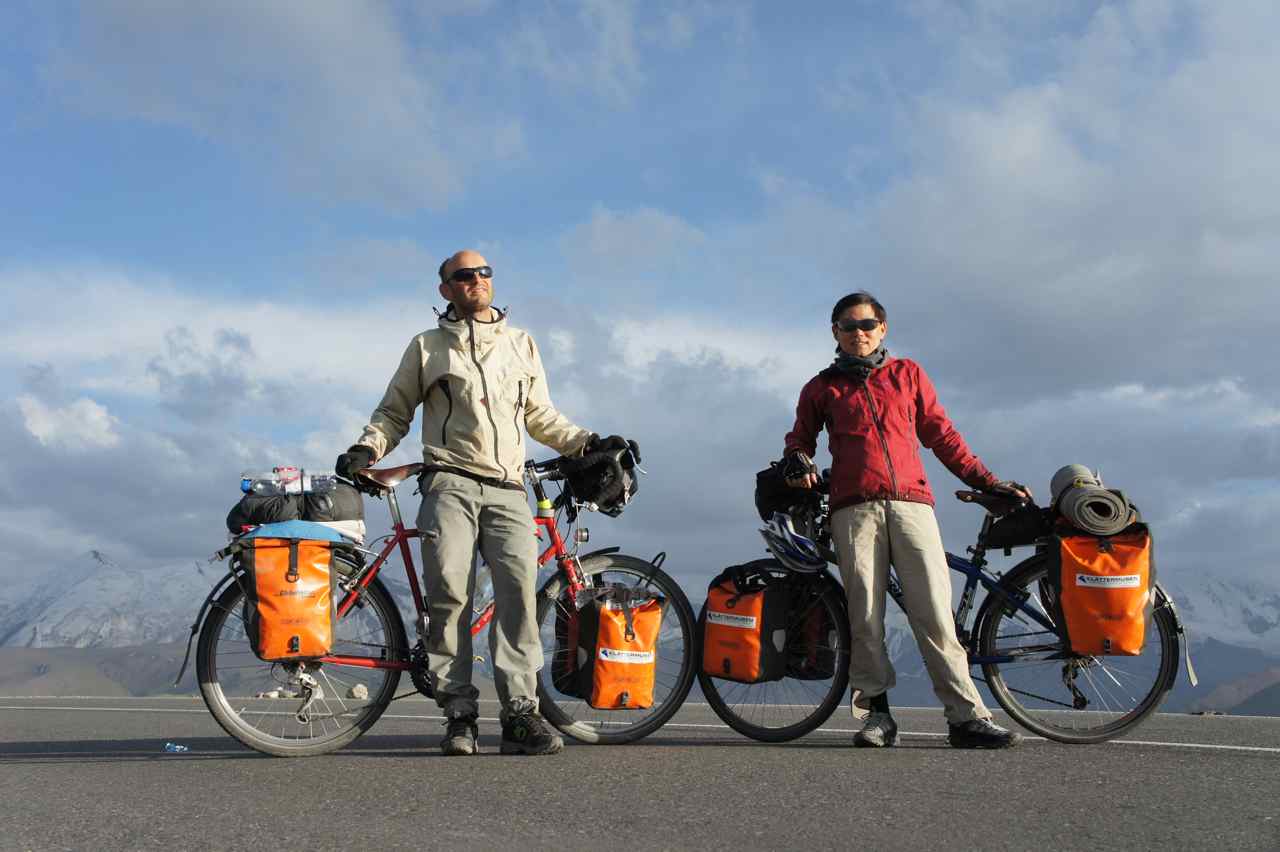

Every uphill has a downhill on the other side and so did this one. With a perfect road, a gentle slope and no traffic made both of us beat our speed records. The new record is now 68.8 km/h. With our heavy loaded bicycles it felt like riding a motorcycle
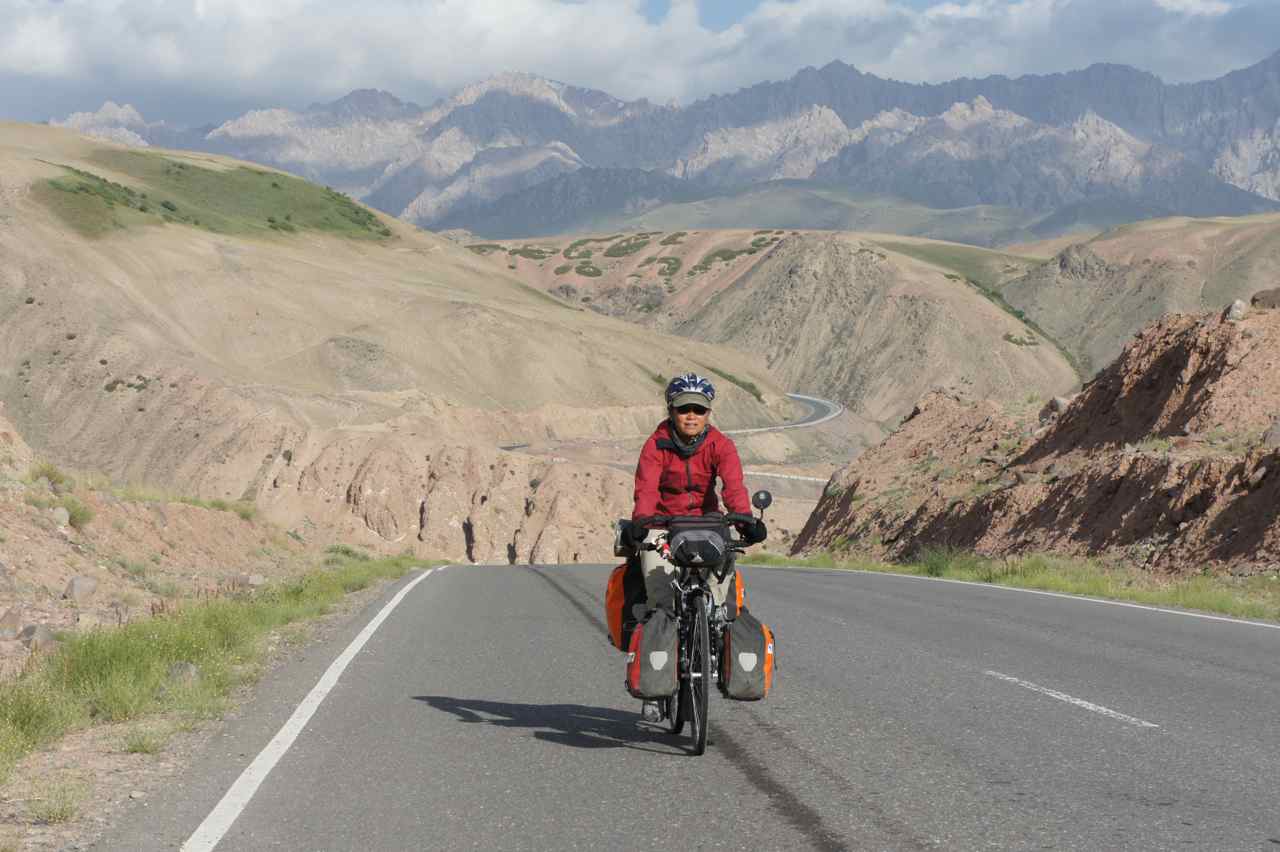

What took us 90 minutes to go uphill would take less than maybe 10 minutes to roll downhill if it wasn’t for the many stops to take photos and just admire the stunning scenery.
Our late start and the many stops made us ride through the sunset. The wind picked up in the evening and when we looked for a spot to pitch our tent we had to find one that provided some shelter from the wind. The spot we found had a wonderful view but when we finally had time to sit down and enjoy it, it was already dark.
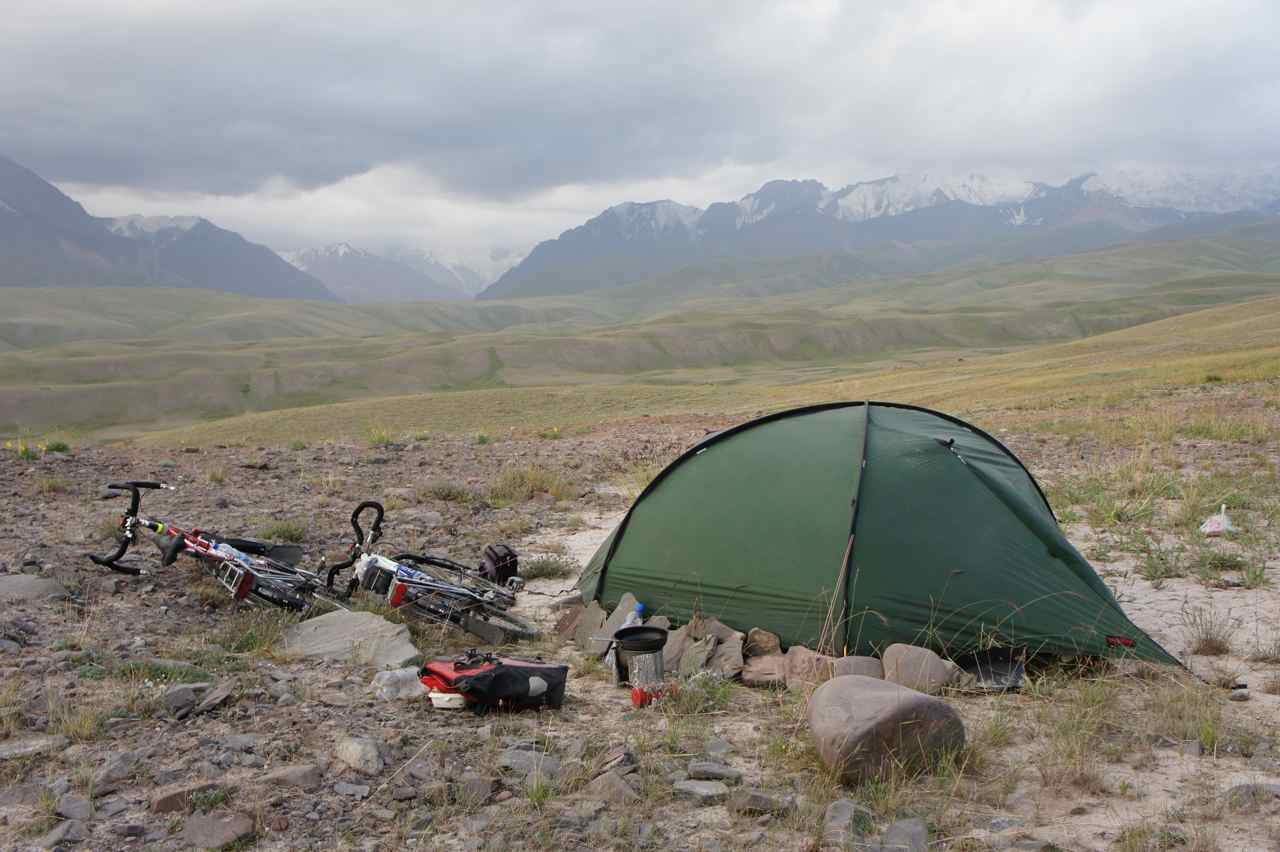

The following morning was the day we had waited for for almost a week – the day of our entry into China. It is always sensitive to take photos in border zones in this part of the world and thus we don’t have very many pictures from this area.
After only 5 km from our campsites, we had our first encounter with the border formalities. Kyrgyzstan has a pre-checkpoint 10 km from the real border and here they checked our passports and noted our names in a book before we could continue.
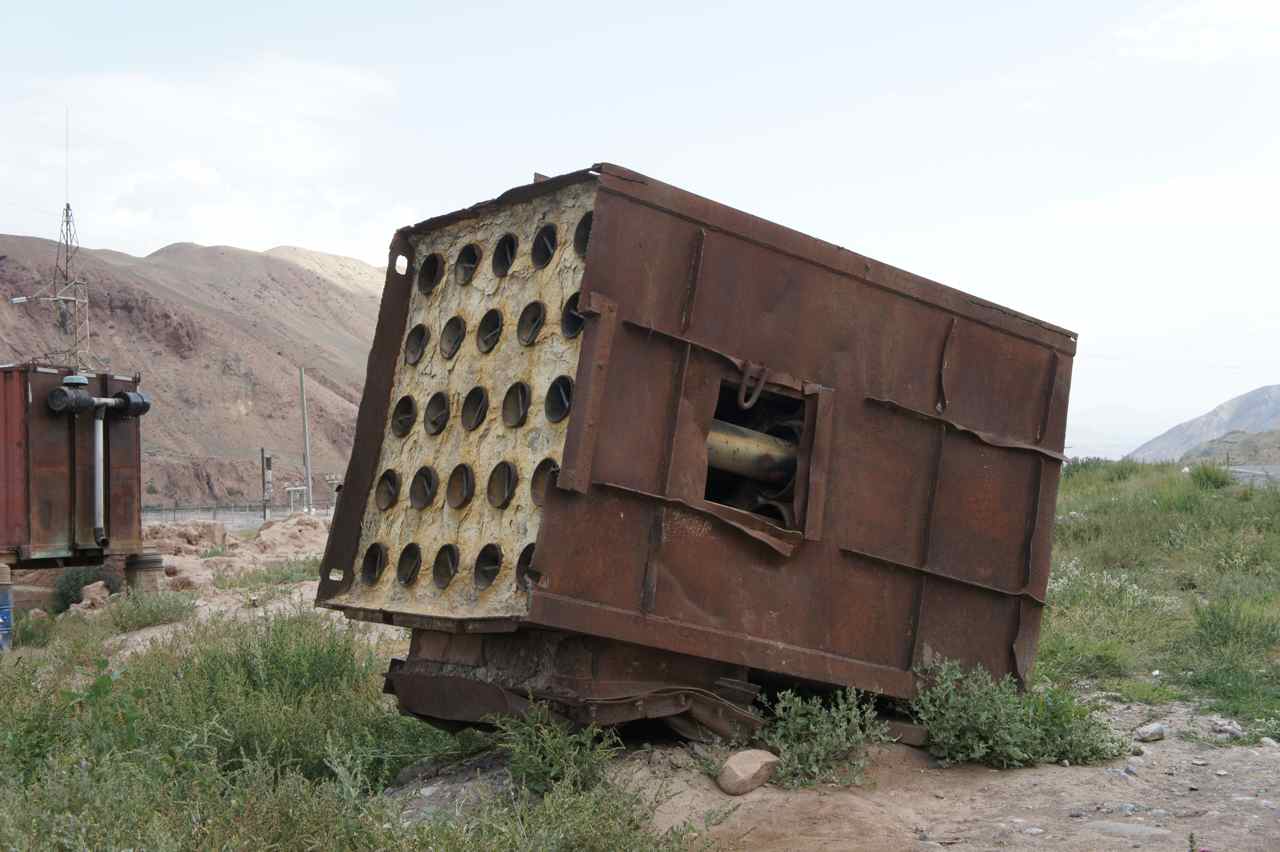

An old rocktet launcher (Stalin Organ) beside the road in Nura. It even had some rockets inside. It can’t have been in use since it was aimed back at Kyrgyzstan rather than towards China.
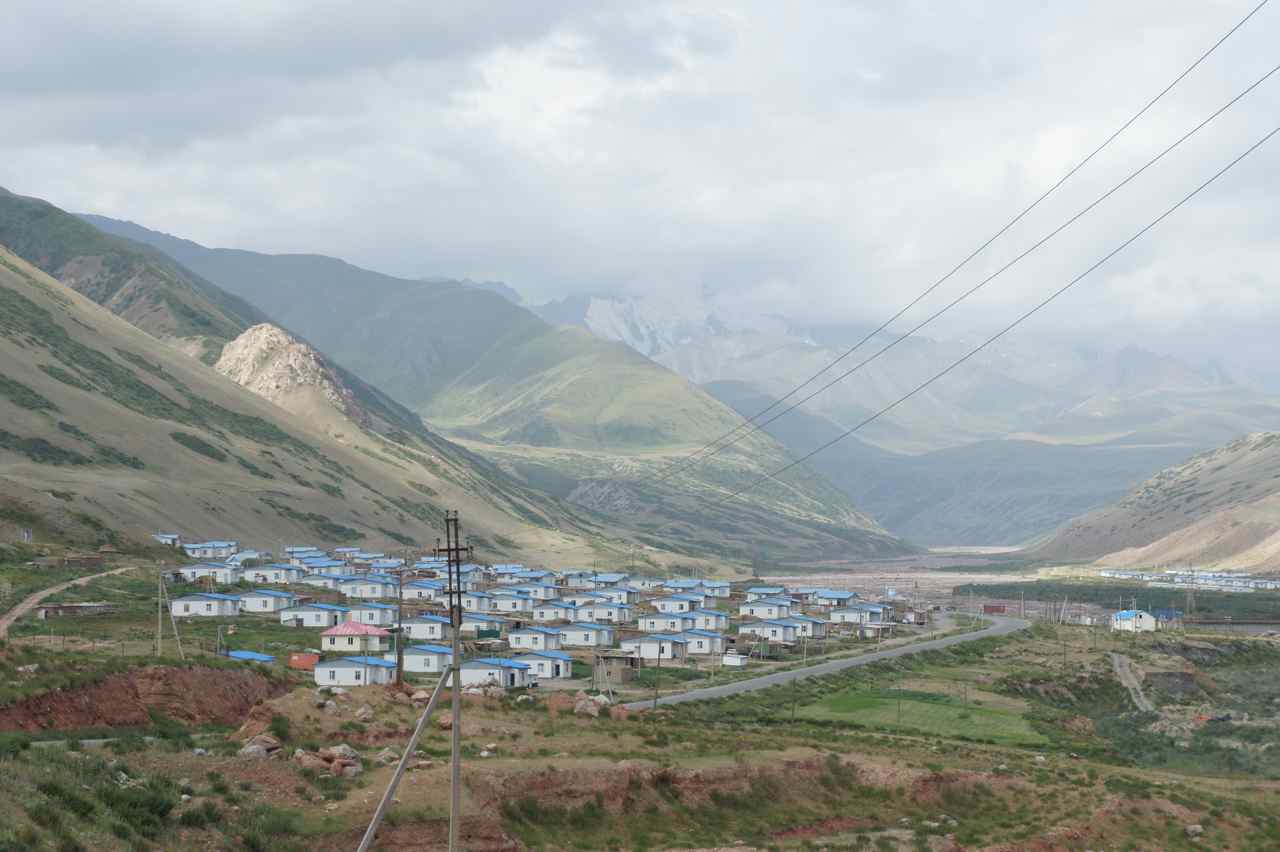
A few kilometers before the real border we got to the village of Nura. All the buildings looked very similar and all had bright blue roofs. We had never seen such similarity in Kirgizstan before, but later we were told that the village was destroyed by a earthquake and a following landslide some years ago. When rebuilding the village all houses came out in the same way.

The proceedings at the Kyrgyz side of the border was smooth. We cycled past several hundred trucks that were waiting to get through. With our exit visas stamped into our passports we could ride 500 meter to the chinese side where a lone chinese soldier took a quick look in our passports and told us to go to the next checkpoint 4 km down the road.
The chinese have moved the real border checkpoint 140 km inland and the second checkpoint in the mountains was only a sort of a thorough pre-check. We got a few of our panniers inspected and they even asked us to show the content of our computer and camera.
Since it is only a pre-check we didn’t get any stamps there and the chinese don’t want independant travellers inside the country who haven’t yet passed the proper border checkpoint. This is a wellknown fact among cyclists and we knew that the officials would put us either on a shared taxi or a truck. We had prepared for this by buying some ropes at the bazar in Osh to tie our bikes and bags to the truck.
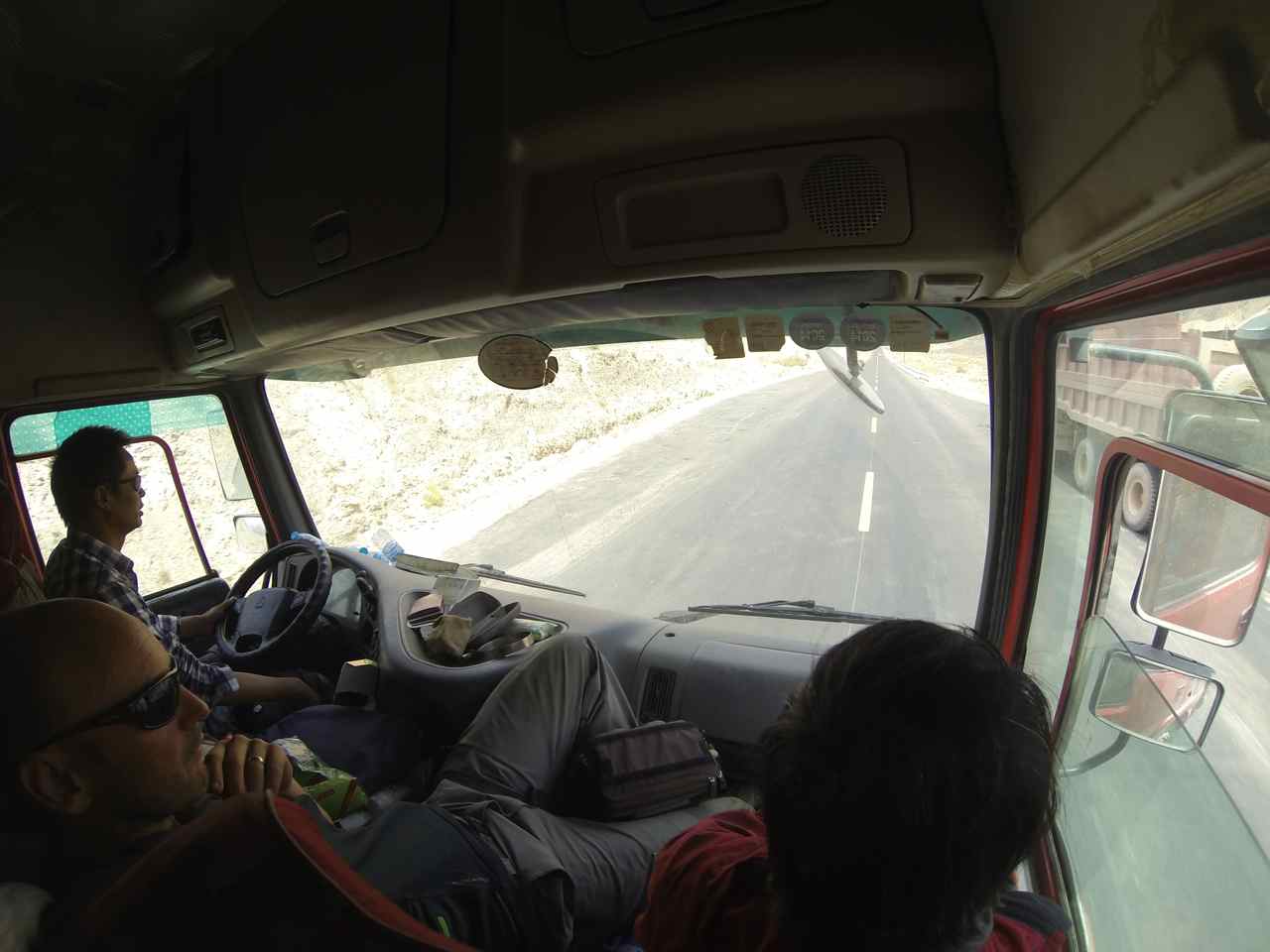

A chinese officer found a truck for us and we removed the pedals and turned the handlebar and loaded our things into the empty cargo hold only to find that there were no holes, no hooks, no nothing to tie our bikes and bags to so we tied them together hoping that one big and heavy piece would move around less.
The road is mostly on gravel but a new road is built and some sections are ready and in use. At one of those sections there was a long pile of gravel across the road. It was maybe 20 cm high and I saw it long before we got there. When we approached the driver didn’t slow down and a few seconds before hitting it I understood the the driver hadn’t seen it. Wej and I held on to our seats and then a huge ”baaang” sent us airborne for a second or two. When we landed the loockers over the windscreen got open and the drivers private clothes, blankets, food, tools etc. fell out over us.
We got seriously concerned for our bikes. They must have gone airborne too and we feared that something must have got broken, but when we arrived at the real border checkpoint 4 hours later we found out that the bikes and everything was OK.
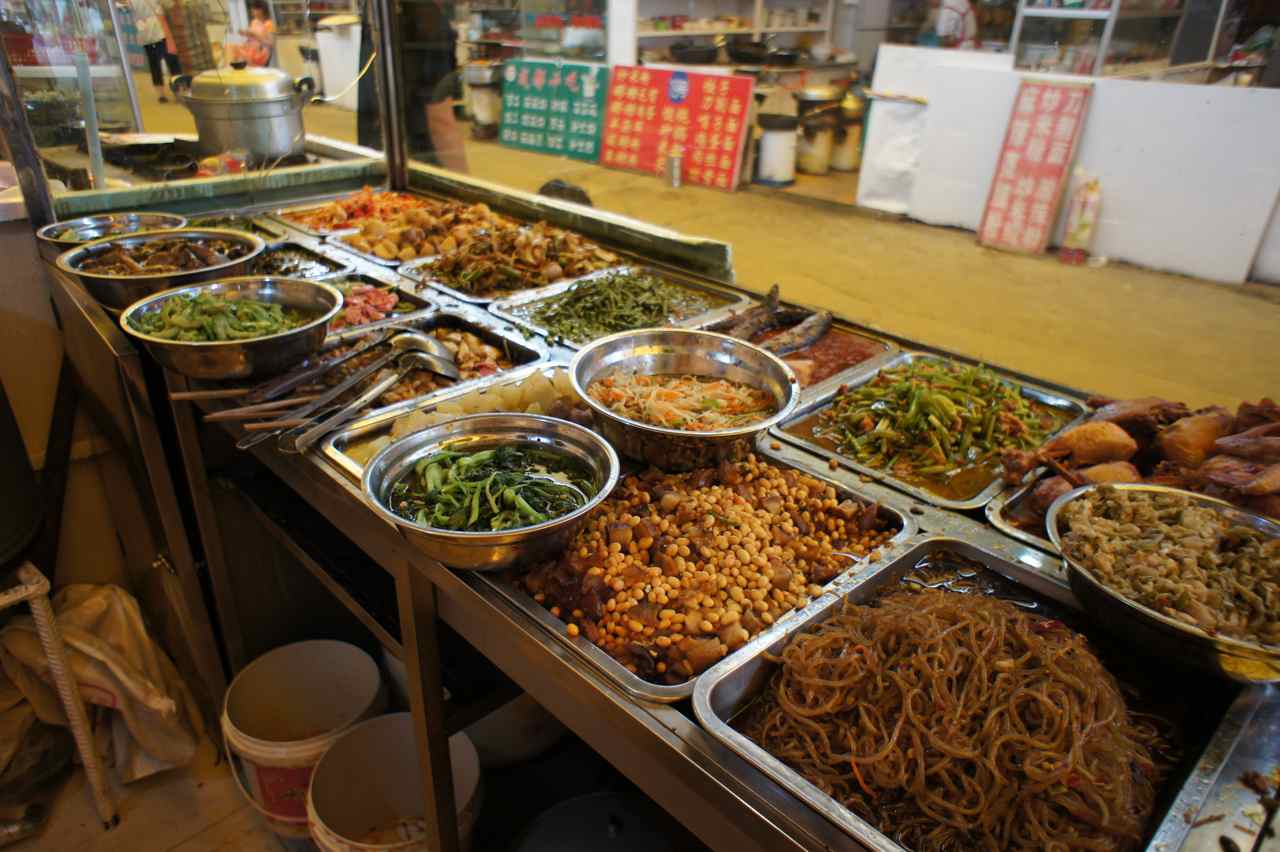

When we arrived to the border it was already 6 PM and 100 km remained into the city of Kashgar. We had forgot to buy food and water at the border and were hungry and thirsty, we had no map and no chinese currency so we decided to hitchhike with another truck into Kashgar city. This was our first proper cheat on this trip. When we took the train in Georgia it was because of Wej’s injured knee, but this time the only reason was laziness and bad planning.
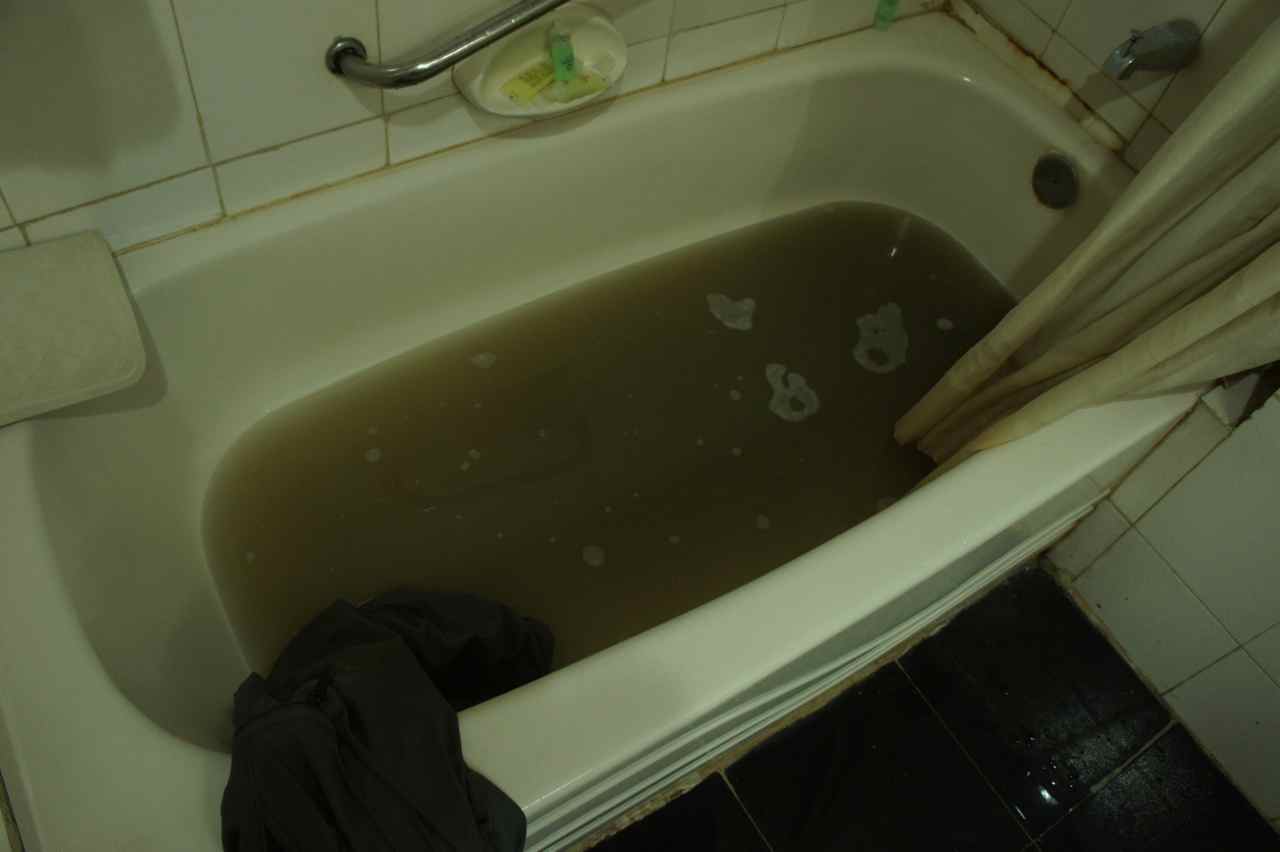
We cycled 10 km from the truck parking area and checked into a nice hotel. It was wonderful to shower again after a week without. We also soaked all our clothes in the bathtub for one entire night and they came out like new….

Kashgar is a small city by Chinese measures but big with Swedish. We stayed for two days and enjoyed strolling around, going to restaurants, buying some electronics (extra harddrive and battery pack) and just be in a big city again.